


how does bull compare to weber?
We are often asked how Bull compares to Weber. In short: Weber is great. Bull is better.
When designing the Grillo outdoor kitchen range, the gas grill was foremost in our minds. A premium outdoor kitchen had to have a powerful, premium grill. We carried out extensive research and testing, and settled on a brand which, in our opinion, is the very best on the market. So why did we go with Bull over Weber? This article aims to answer that question, covering the following key points:
- DESIGNED FOR OUTDOOR KITCHENS – Bull was the first in the industry to specialise in ‘built-in’ BBQs
- COMMERCIAL-GRADE-QUALITY – In the flashy, marketing-driven world of BBQs, Bull’s quality-first approach is rare, and driven by the Founder himself
- AESTHETICS – Seamless integration and flush style give that true ‘built-in’ look
- LIFETIME WARRANTY – Bull Grills have a lifetime warranty for total peace of mind
- MOST POWERFUL IN CLASS – Bull grills are the most powerful globally-available grills in their class. Read our Bull Power article for a deep-dive into this.
Credit to Weber. Case for Bull.
Let’s get one thing clear from the outset – we’re not knocking Weber. Weber is one of the most recognisable brands in the world – not merely among barbeque manufacturers, but among global consumer brands. Their products have gained a reputation for reliability, durability and quality, and their iconic designs have become… well, iconic.
However, when it comes to outdoor kitchens, there are several reasons why Bull becomes a particularly compelling choice – and we’ve outlined the key ones below. But if you’re loyal to Weber, that’s totally fine. Sit your grill at the end of a run of kitchen, or get creative like the owners of this neat setup on the edge of Sydney’s vast Royal National Park.
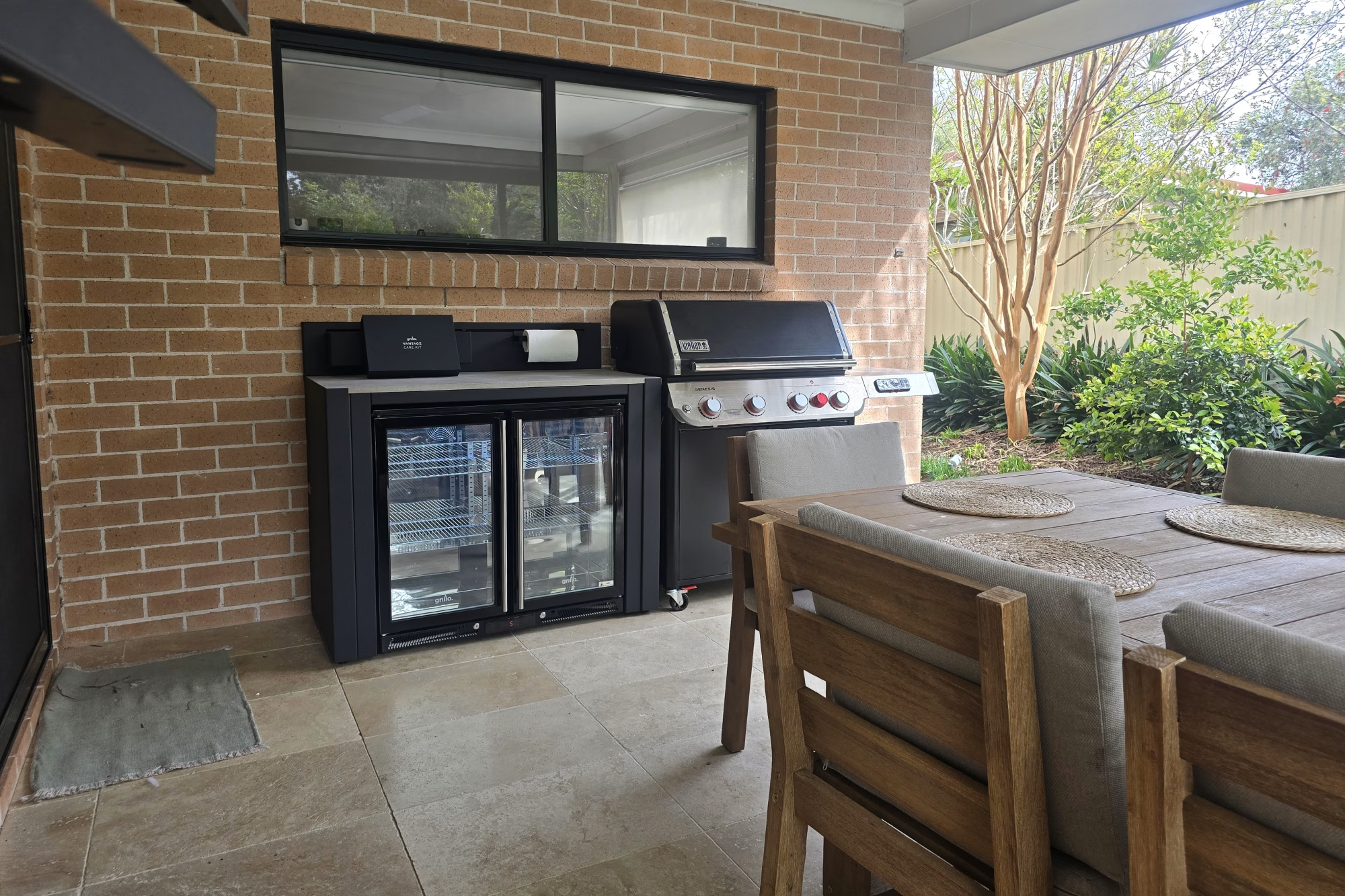
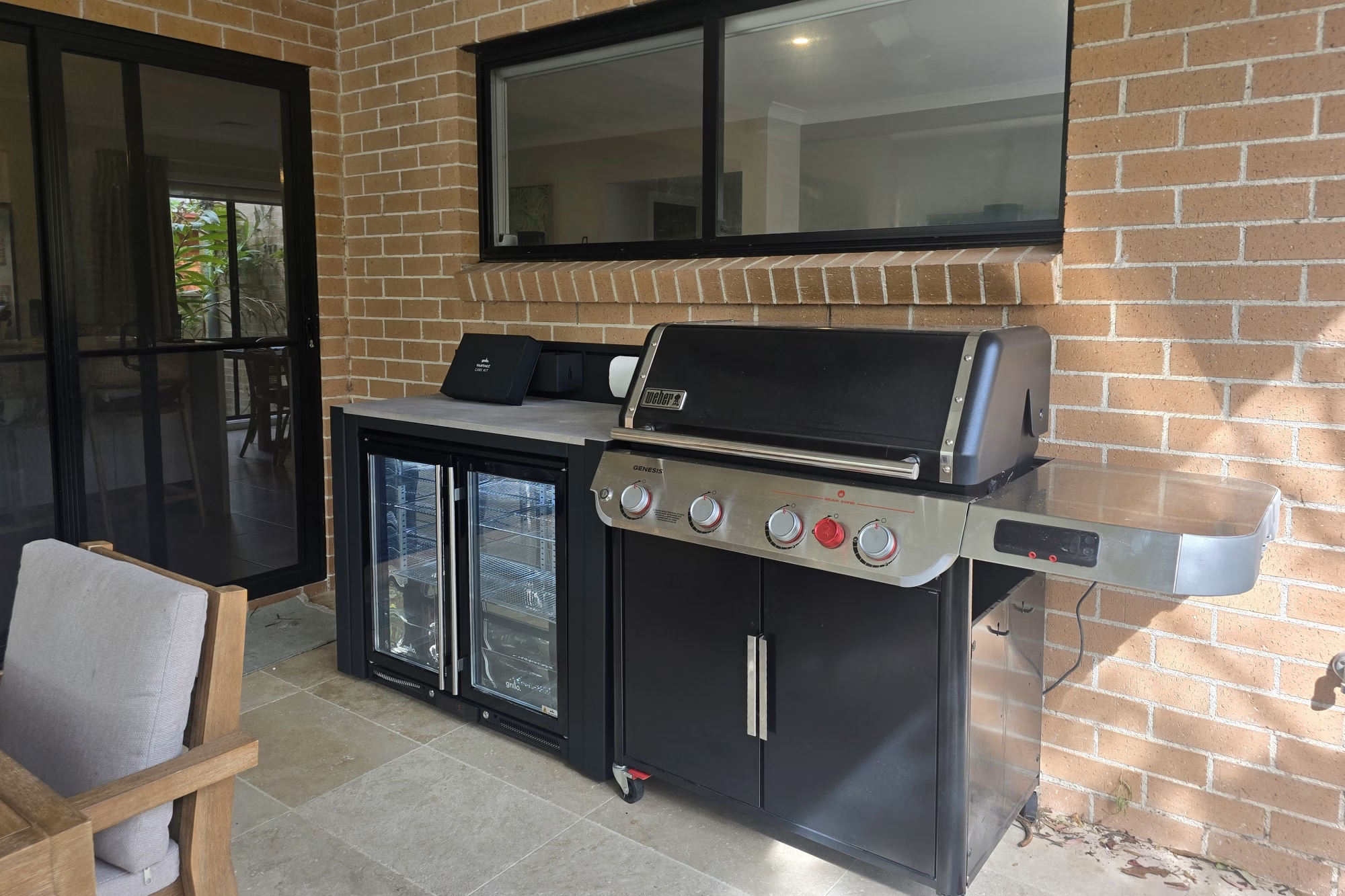
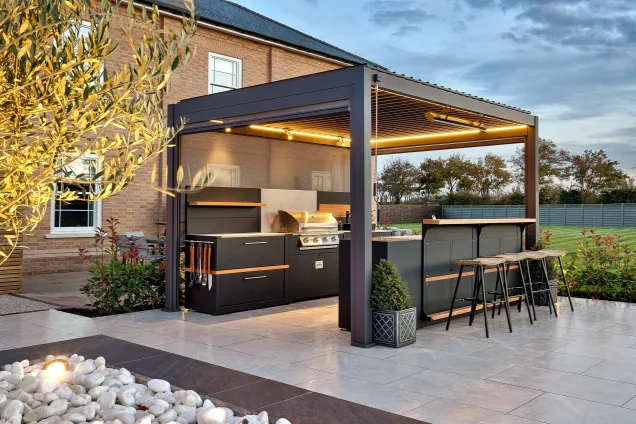
1. Designed for Outdoor Kitchens
Weber excels at freestanding cart barbeques; Bull, meanwhile, has spent more than 30 years perfecting grills built specifically for outdoor kitchens. There are a few important differences between the two approaches – and these are the big ones.
Freestanding grills like Weber’s typically have a fat tray that pulls out from the back, which becomes a headache (if not impossible) once the barbeque is integrated into cabinetry. Bull avoids this completely with a neat, front-pull-out tray that’s easy to access.
Then there’s the lid: Bull’s design needs far less clearance when opened, allowing it to slot into outdoor-kitchen layouts more cleanly and without wasting valuable depth.
2. Commercial-Grade Quality
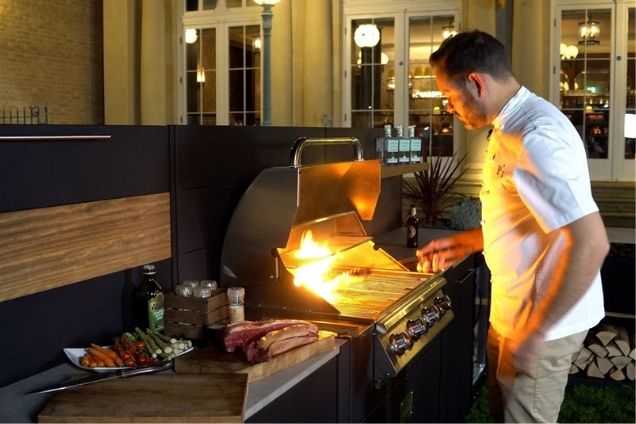
Bull’s gas grills are very impressive from an engineer’s perspective. Designed for commercial use, they feature heavy-gauge high-grade 304 stainless steel construction (beautifully welded at that), rare cast stainless burners on the Angus, heavy 304 stainless grates, a 304 stainless handle with matching polished 304 elbows, and more power than pretty much any other grill of their size on the market. It’s quality like this that sees Bull grills used in commercial kitchens, like Peterley Manor Farm’s brace of Bull Outlaws, which get heavy use 6 days a week for 6 months of the year.
We sat down with Frank Mello, Bull’s VP of Sales and Marketing, to find out what’s behind their all-too-rare quality-first approach. In brief – it’s driven from the Founder down. Watch the video to find out more.
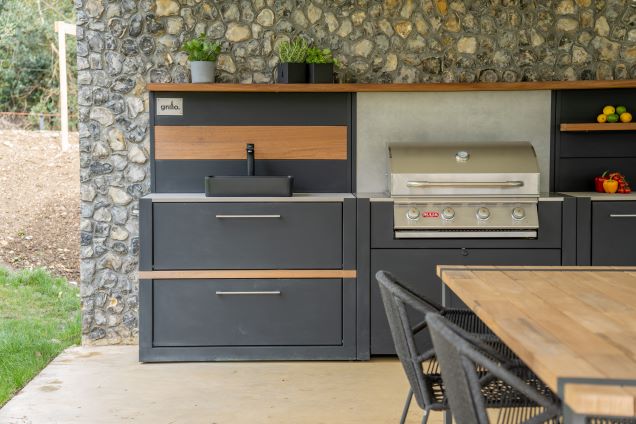
3. Aesthetics
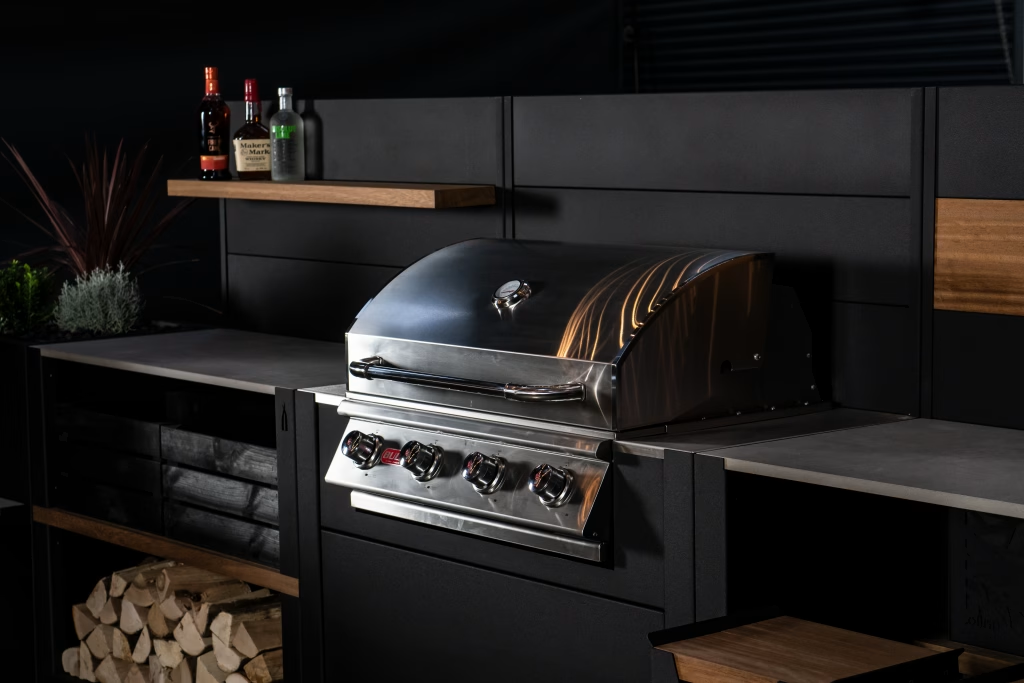
One of the most obvious reasons for choosing Bull is that it allows seamless integration of the grill into the cabinetry. People often buy a Grillo kitchen because they love the overall appearance and design. The materials were not only selected for their durability but also for their appearance and tactility. Built-in appliances such as grills, bins, and fridges have rapidly become the norm, reflecting the longstanding trend in indoor kitchen design. When was the last time you saw a freestanding dishwasher?
4. Lifetime Warranty
Bull’s slogan is “This is the last BBQ you’ll ever buy!” It’s not a guarantee (!), but it’s also not a claim they make lightly. Bull’s barbeques all carry a lifetime warranty on the hood, grates and firebox. In addition, the Angus also includes a lifetime warranty on the cast stainless steel burners.
Weber, by comparison, typically has a 10 year warranty on the same parts (although they don’t offer a cast stainless burner). In any case, you’re not likely to have critical structural issues with either brand.
What’s more common is wear and tear from use and weathering, and that’s where Bull has the edge: there’s no cart to get shonky over time, no coated plastic parts to flake or start showing their age. Bull’s control knobs, for instance, are solid-zinc castings.
5. Most Powerful in Class
Bull grills have more cooking power than almost any other grill in their class and size. Read the full article on Bull grills’ power compared to their peers here.
As the article explains, a direct comparison with Weber is difficult because of Weber’s unique “Sear Zone” set up. It’s particularly unclear whether the Genesis has the necessary gas flow to run all burners simultaneously at their advertised power. But even giving Weber the benefit of the doubt, the Bull Angus and Outlaw’s 60,000BTU main burners are about 8,000BTU more powerful than any equivalent-sized grill from Weber.
Summary
Bull and Weber are both top grill brands, but they serve different needs. Weber excels at freestanding cart grills, while Bull is purpose-built for outdoor kitchens, with professional-grade construction, seamless integration, and superior durability. For built-in setups, Bull’s design and pro-level quality make it the clear choice. We’re calling time on carts.