


Bull BBQ Power
Bull Angus and Outlaw barbeques are the most powerful gas grills in their class. With power goes responsibility: As the chef, the buck stops with you! Here’s how to handle the power of a Bull.
Most Powerful in Class
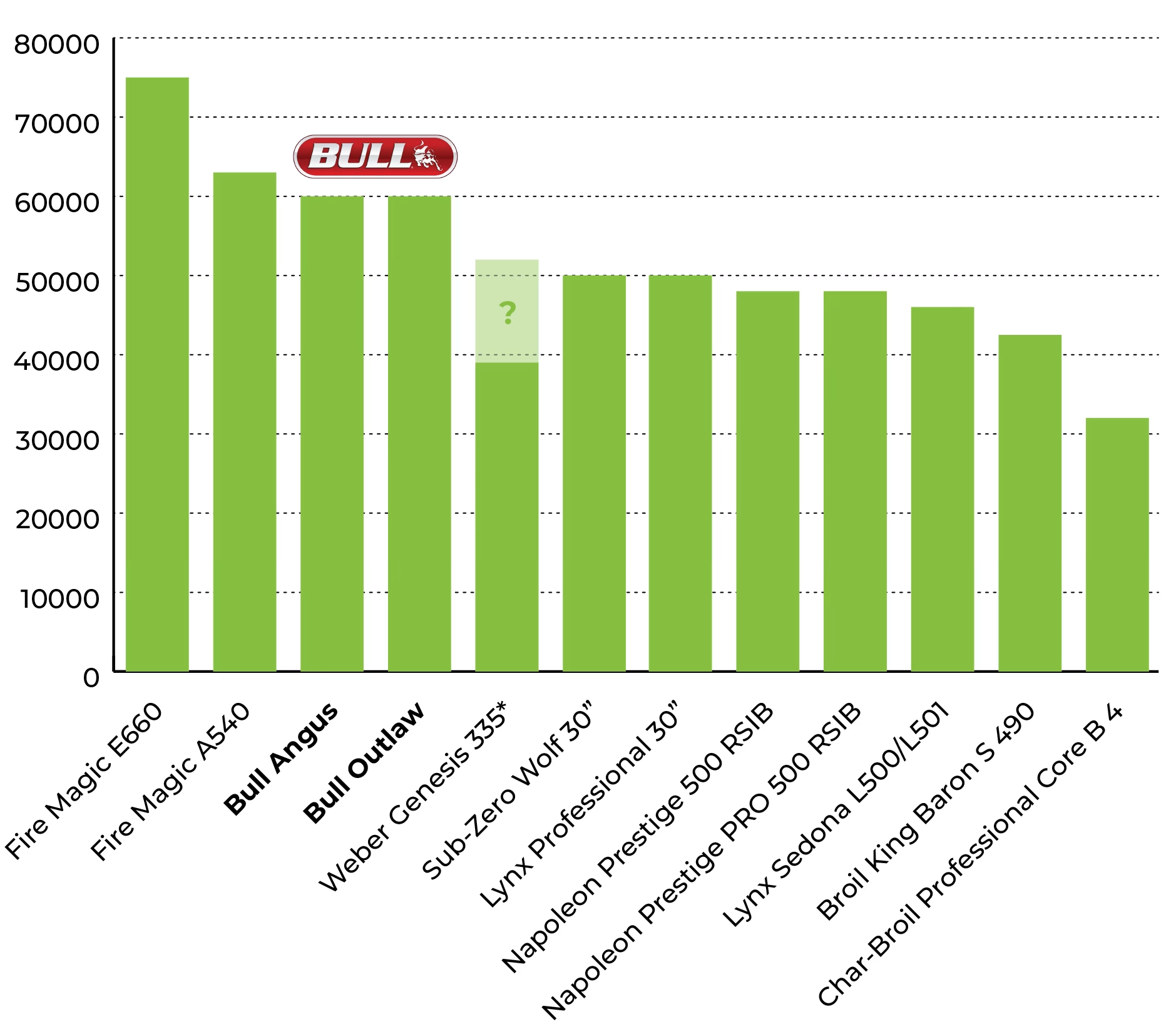
The Bull Outlaw and Angus grills are the most powerful 30” gas barbeques in their class, at their price point, from any global BBQ manufacturer. They beat out Weber, Napoleon, Wolf, Broil King, Lynx, and Char-Broil. In fact, the only global brand we know of that beats Bull at any price point is Fire Magic, where an equivalent grill head costs £7,000 – £10,000 / AUD $15,000 – $20,000.
30" Gas Grills by Main Burner Power (BTUs):
Graph notes
We chose globally-available grills in the large 30″ grill class. Where there are multiple grills in the same class from the same manufacturer, we’ve chosen the most powerful variant.
Note that manufacturers’ headline performance figures often include rotisseries and side burners. This is misleading, as rotisseries can only be run with the main burners low or off due to overheating – see Does the graph include rotisserie burners? below. So for the most accurate comparison, power data shown is for main burners only, excluding rotisserie burners and any external burners.
Internal searing burners usually replace a standard main burner, so they have been included where fitted as standard.
See the note below explaining the uncertainty over Weber’s position on the graph.
*Weber Genesis searing system notes
The Weber Genesis 300- and 400-series searing system is unique: instead of using a higher-powered ceramic IR burner, it adds another identical main burner between two of the existing main burners. It’s very unclear if the grill has the necessary BTU input to run all internal burners at their advertised power simultaneously. Weber’s own advice is to turn one burner down when using the sear zone, and the grill is advertised as a “3-burner” with “39,000 BTU-per-hour input”, despite having 4 burners equalling 52,000 BTU. We’ll let you decide which figure is accurate! The lighter green part of the Weber bar represents the searing burner (13,000 BTUs).
Does the graph include rotisserie burners?
No. Rotisseries use infrared heat instead of convective heat, and are only used with the other burners set to Low or Off. This is due to the risk of overheating and damaging the hood. For this reason we’ve excluded them from the graph. Most manufacturers shown offer a rotisserie burner – the exceptions being Weber and Char-Broil. For the grills shown, rotisserie burner powers range from 11,000 – 18,000 BTUs, with Bull at 15,000 BTUs.
Handling the Power
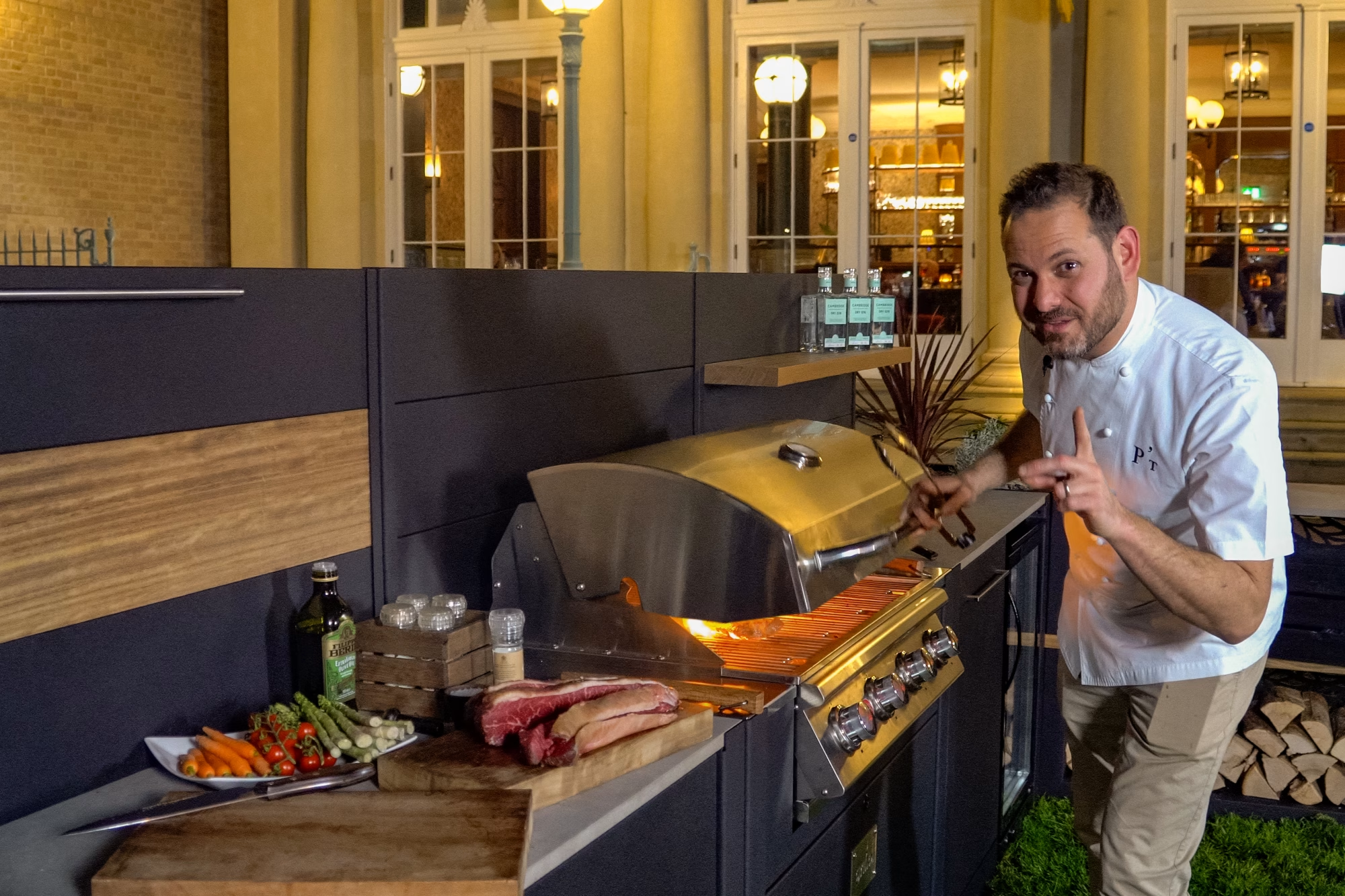
I recall being told by a professional driver for Mercedes that they once had a customer return his E63 AMG because it was too powerful and he kept spinning it on roundabouts. He swapped it out for a lower-powered 4-wheel-drive version, and was delighted. Not only was it safer – he could drive faster.
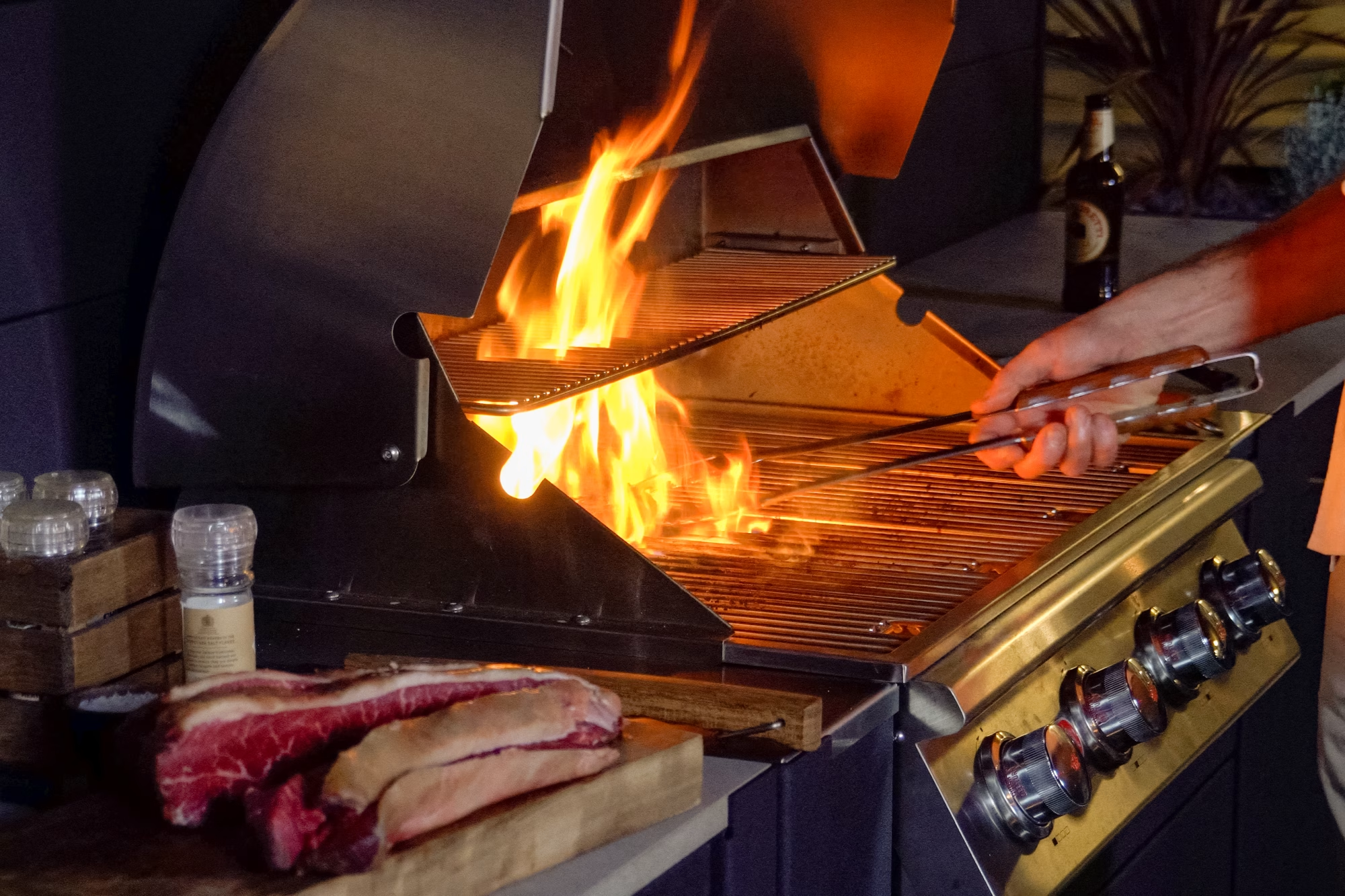
The moral of the story? Throttle control is important, in cars as in barbeques. The more power you use, the greater the potential for things to get out of control. Using full power on your Bull gas grill won’t bring you to the attention of the local constabulary (!), but it will increase the potential for flare ups and hot spots. Knowing your grill is key: when to use the power, and when to back off; when to rotate food quickly around the grill, and when you can just leave it and go find a beer.
Grilling Tips for High-Powered Grills:
1. Preheat the grill – 10mins on medium heat
1. Preheat the grill – 10mins on medium heat
Give the grill around 10 minutes on medium heat with the lid down to properly preheat it. Bull grates are heavy-duty stainless steel, and need preheating to reach proper cooking temperature across the whole surface.
2. This is a commercial grill – use full power sparingly
2. This is a commercial grill – use full power sparingly
We’ve all had the experience of cooking on an underpowered grill. Once underseared, twice shy – our instinct is to default to full power. However, this is a commercial grill, and often half power or less is more than adequate, and more controllable. For example, when cooking proper British sausages on the Bull, between ½ and minimum power for the duration of the cook typically gives the best results. As with internal hobs, leaving things on full power often means burnt food, and increases the risk of a fat fire.
3. Use heat zoning to your advantage
3. Use heat zoning to your advantage
Many professional brands now integrate searing burners alongside the main burners, creating a fiercely hot side and a cooler side to the grill. This is great for quickly browning food, and also debunks the myth that a gas grill must have ‘perfectly-even’ heat distribution. Bull offer a separate searing burner that you can install yourself, but the raw power of the main burners means this is rarely necessary in a domestic setting. Set the burners on one side to High and the remainder to Low. Use the hotter areas on the BBQ for searing, then move the food to cooler zones (or upper rack) to cook through.
4. Use the oven effect for large quantities of food
4. Use the oven effect for large quantities of food
The lower the power you use, the more even the heat will be. Keeping the lid down and the burners on low creates a more even heat, which is useful when you’re not in a hurry, or when you’re cooking a large quantity of fatty food and want to reduce flare ups.
5. Rotate food regularly around the grill
5. Rotate food regularly around the grill
With gas grill, perfectly-even heat distribution is only ever exists in the marketing department. Gas grills have high airflow, with large volumes of cold air being drawn in, rapidly heated, then vented out, all within seconds. This is very different to charcoal grills, where the airflow is deliberately restricted to control the oxygen level. With gas grills, the more power you use, the less even the heat will be. A chef very quickly learns where the hotter and colder areas are, and uses them to advantage by rotating the food between them. As a general rule: the front is cooler (due to temperature regulations on control dials); the sides are cooler (due to the metal absorbing heat and distance from burners); the highest heat is found between the burners.
6. Beware of fat fires
6. Beware of fat fires
The biggest contributor to fat fires is poor grill design, but it’s not the only factor. In addition to the usual precautions (regularly cleaning the fat tray and not leaving the grill unattended) be particularly vigilant if you’re cooking fatty food over a high heat. High-powered burners make fat fires more likely, especially if the best-practice grilling techniques above are disregarded.
What Makes Bull Different
We invited Frank Mello, Bull’s VP of Sales and Marketing, to our Cambridge HQ. We learnt a lot. The gist of it was that Bull grills are professional-grade; built to be very powerful, strong and highly durable. Yes, any brand can (and will) tell you that. But one comment he made really struck me. “It took years for us to get him [Mark Nureddine, Bull founder] to put lights in our grills because he was afraid that the lights would go out and our customers would have issues.” This (over-?) cautious, reliability-first approach is unique in the marketing-driven world of barbeque development. Listen to Frank to get the full story.
Summary
Bull say this is the last barbeque you’ll ever buy.
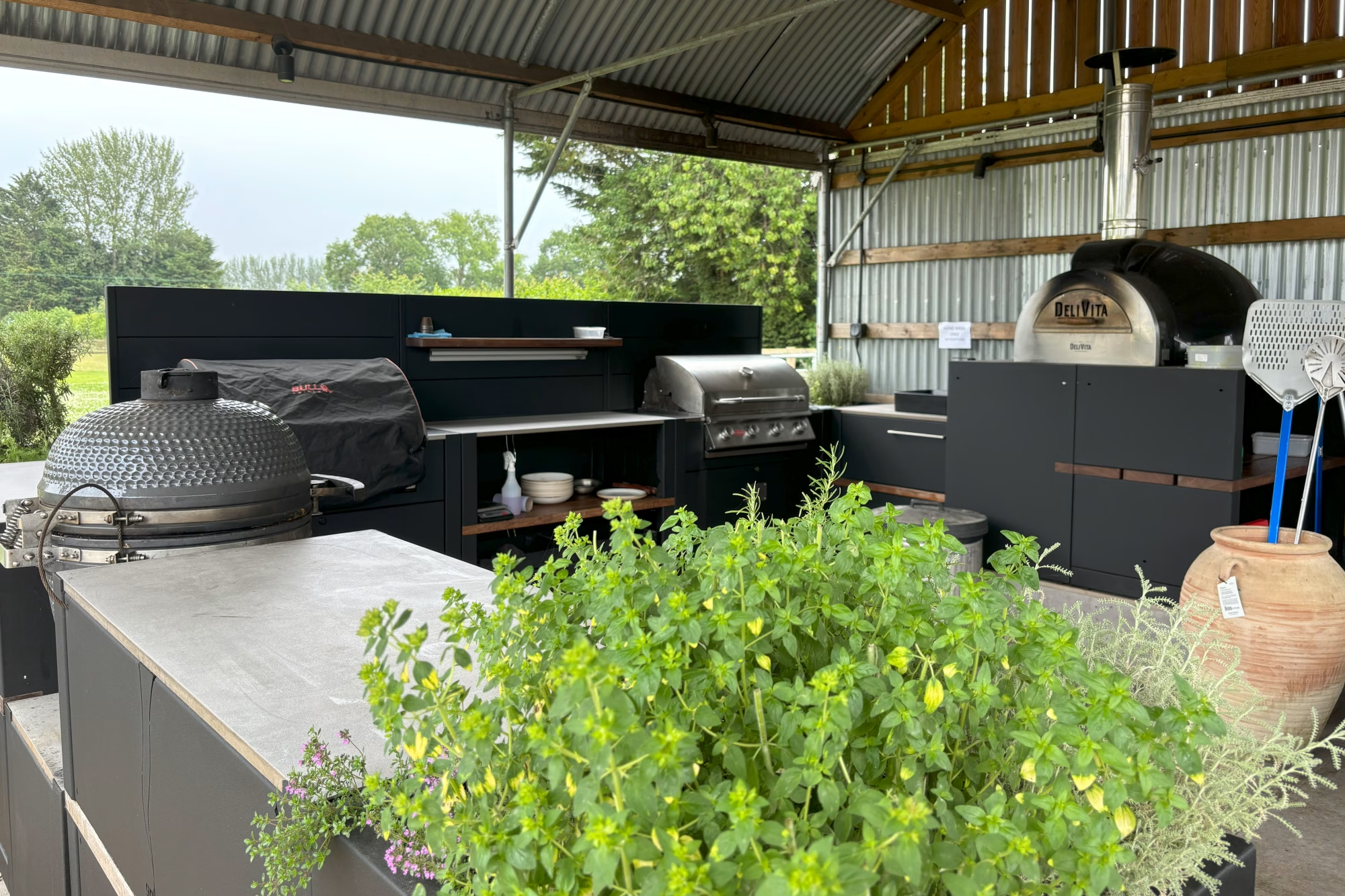
A proper, solid, reliable gas grill is an investment. The chefs at Peterley Manor Farm would agree – their brace of Bull Outlaws are used 6 days a week, 6 months of the year. And don’t worry too much about perfection. As Tom Kerridge told us, “it doesn’t matter too much if it gets a bit overcooked or charred or burnt around the outside… We’re not looking at posh dinner party stuff here. We’re looking for driving flavour, having fun and social connection.” We’re sure you’ll enjoy your Bull, and if you follow the steps outlined above, you’ll find they’re quite easy to tame.
“It doesn't matter too much if it gets a bit overcooked or charred or burnt around the outside… We're not looking at posh dinner party stuff here. We're looking for driving flavour, having fun and social connection.”


Bull Gas Grill FAQs
How will Bull grills compare with what I’m used to?
How will Bull grills compare with what I’m used to?
It’s probably quite a bit more powerful that the grill you had before. (Check the graph at the top of this article – we’ve picked the most powerful 30” grills from top global manufacturers). If you’re worried about the power, then try using it on half-power at first. My old D.T. teacher used to say “always take off, difficult to put back”. This can be adapted to many situations in life!
Why does my grill have hot and cold spots? The front and sides don’t cook properly.
Why does my grill have hot and cold spots? The front and sides don’t cook properly.
There are many factors that affect this. The front is almost always cooler to meet regulations that require the controls to stay cool-to-touch. The edges are often cooler as the steel sides absorb some of the heat. The angle and strength of the wind in relation to the intake and exhaust can affect it too, as can the ambient air temperature. See the Grilling Tips above for how to mitigate this, but these two things will always help: preheating the grill and using a lower power for cooking.
Do all grills have hot and cold spots?
Do all grills have hot and cold spots?
Yes, and the more powerful the grill (and the more power you use), the harder it is for the engineers to reduce temperature variations across the surface. Bear in mind that, unlike an charcoal barbeque, a gas grill is specifically designed to have a very high volume of air rotating through it. Air is drawn in, heated to several hundred degrees, then pushed out the large top vent, rapidly cooling as it goes, all within seconds.
How do chefs handle temperature differences on grilling surfaces?
How do chefs handle temperature differences on grilling surfaces?
We’ll let Wade Fortin, two-time World Burger Champion and Bull director, answer this: “As a professional chef, and like many others who cook with precision, I’ve learned that truly getting to know your grill means understanding the subtle heat variations across the cooking surface. We use these differences to our advantage: searing over high heat, then moving food to cooler zones to finish gently, control flare-ups, and avoid overcooking. With experience, grilling becomes intuitive, guided by touch, sound, and visual cues, and that’s part of what makes cooking with live fire such an enjoyable and rewarding way to cook.”